Every fall, property managers face the same choice: lock in a seasonal snow contract, or pay per storm and hope for a mild winter. Both are smart in the right situation. The trick is knowing which situation you're in.
Here's how each contract type works, what snow removal typically costs, a simple way to find your break-even point, and what to put in writing whichever you choose.
How each contract type works
| Contract | How you pay | Best for |
|---|---|---|
| Seasonal | One fixed price for the winter, often in monthly payments | Properties that need a set budget |
| Per push | Each time the lot is plowed | Owners who want to pay only for what happens |
| Per event (per storm) | One price per storm, often tiered by inches | Paying by storm size |
| Time and materials | Truck hours plus salt used | Unusual sites or backup coverage |
What to watch for in each
- Seasonal: any cap on storms or total snowfall, and what you pay above it.
- Per push: a long overnight storm can mean two or three pushes.
- Per event: how a "storm" is defined, and where the inch tiers break.
- Time and materials: there's no ceiling unless you set one.
What snow removal costs
Commercial snow pricing depends mostly on lot size, how many entrances and walks need clearing, and how early the property has to be open.
Typical published market ranges, not Green Horizon quotes. Commercial properties are priced after a walkthrough.
| Service | Typical range |
|---|---|
| Commercial lot under 10,000 sq ft, per event | $75 to $150 |
| Commercial lot over 50,000 sq ft, per event | $300 to $600+ |
| Commercial seasonal contract | $2,000 to $10,000+ a season |
| Salting a large lot, per application | $100 to $500 |
| Salting walkways, per application | $20 to $50 |
| Residential driveway, per push (Long Island) | About $75, up to $200 for 8 inches+ |
Find your break-even point
Here's the simple math to decide between seasonal and per-push:
Seasonal price ÷ per-push price = break-even number of pushes.
Example: a $3,000 seasonal price and a $150 per-push price break even at 20 pushes. Expect fewer than 20 plowings? Per-push is cheaper. A heavy winter with more? Seasonal wins.
To estimate pushes, start with your trigger depth, the snowfall that starts service (often 2 inches). Islip averages about 31.8 inches a season and about 13 days with measurable snow, but many of those are light dustings that never reach a 2-inch trigger, while one nor'easter can need two or three pushes in a single night. Don't forget salt-only visits for refreezes, which per-push contracts often bill separately.
One storm, four invoices
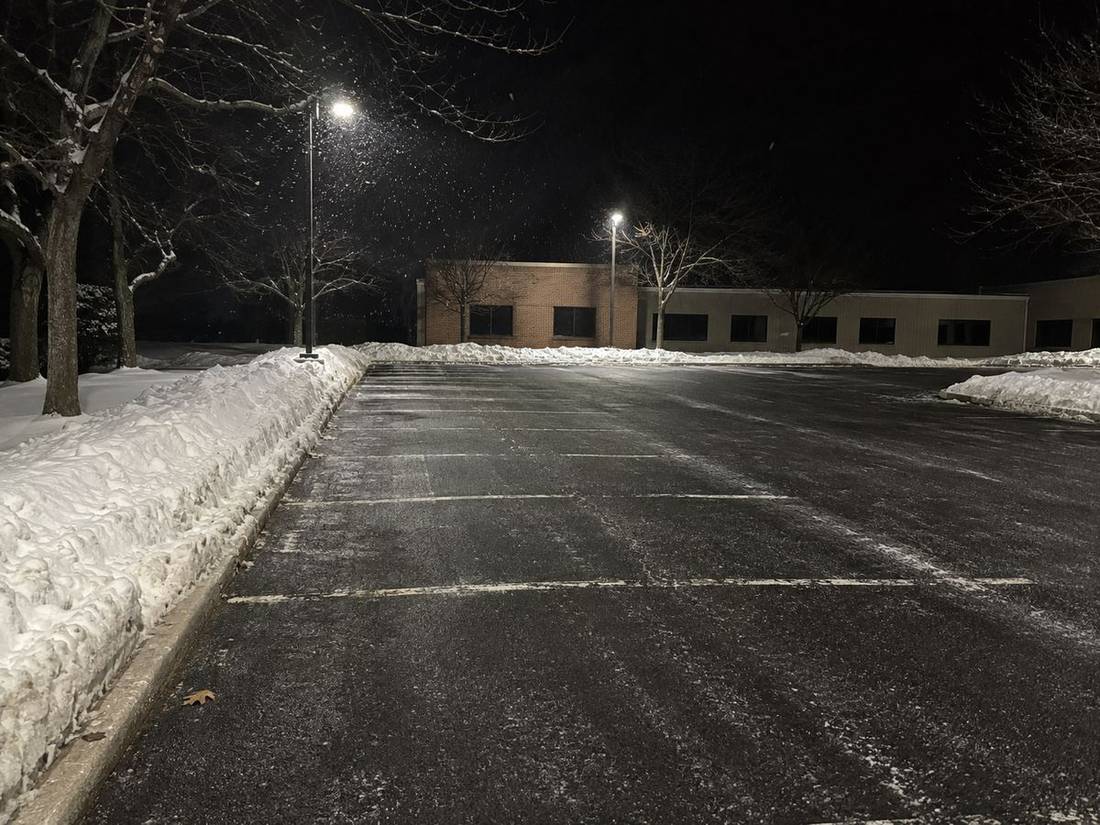
The storm: 9 inches falls overnight. The lot is plowed at 2 a.m. and again at 6 a.m. before the building opens. Walks are shoveled and salted. The next night, meltwater refreezes and the lot needs salt only.
| Contract | How it bills this storm |
|---|---|
| Seasonal | Included, unless the contract caps storms or snowfall |
| Per push | Two pushes, plus walks and salt if listed separately, plus the refreeze salt visit |
| Per event | One storm at the 9-inch tier; the refreeze may be a separate salt-only charge |
| Time and materials | Truck hours for both plowings and the walk crew, plus salt both nights |
Which one should you choose?
- Choose seasonal if you manage a budget for owners or a board and can't explain a surprise bill after a big winter.
- Choose per-push or per-event if you're comfortable with costs that follow the weather, or the site is small and simple.
- Ask about tiered seasonal pricing. Some contracts set several seasonal prices tied to total snowfall, settled once at the end of winter.
Put these in writing, whatever you choose
- Trigger depth for the lot and for walks.
- Open-by time: when the lot and entrances must be clear.
- Return visits during long storms.
- Salt-only calls for refreezes, and how they're billed.
- Snow piles: where snow goes, and who approves hauling it when space runs out.
- Service logs with arrival times and photos.
- Insurance that covers snow and ice work.
Sources: NOAA climate normals · Snow & Ice Management Association