Irrigation is one of the most common sources of finger-pointing at Long Island associations. A dead strip of lawn in July, a cracked backflow device in March, a sprinkler running in the rain: each one leads back to the same question. Whose job was that?
Here's who is usually responsible, the five jobs that need an owner, what irrigation service costs, and how to set it up so nothing falls through the cracks.
Who is usually responsible
| Property type | Who usually handles irrigation |
|---|---|
| Condo association | The association, for common areas. Check your declaration for patios and other limited common areas. |
| HOA (single-family) | The HOA for entrances and common grounds; owners for their own lots, unless the HOA maintains front lawns. |
| Co-op | The co-op corporation, per the proprietary lease. |
| Apartment complex | The owner or management company, through the landscape contract. |
Even when the association is responsible, it usually hires someone to do the work. That's where things break down: the contract says "irrigation" without saying which parts.
The five irrigation jobs someone has to own
- Spring start-up (April to May)
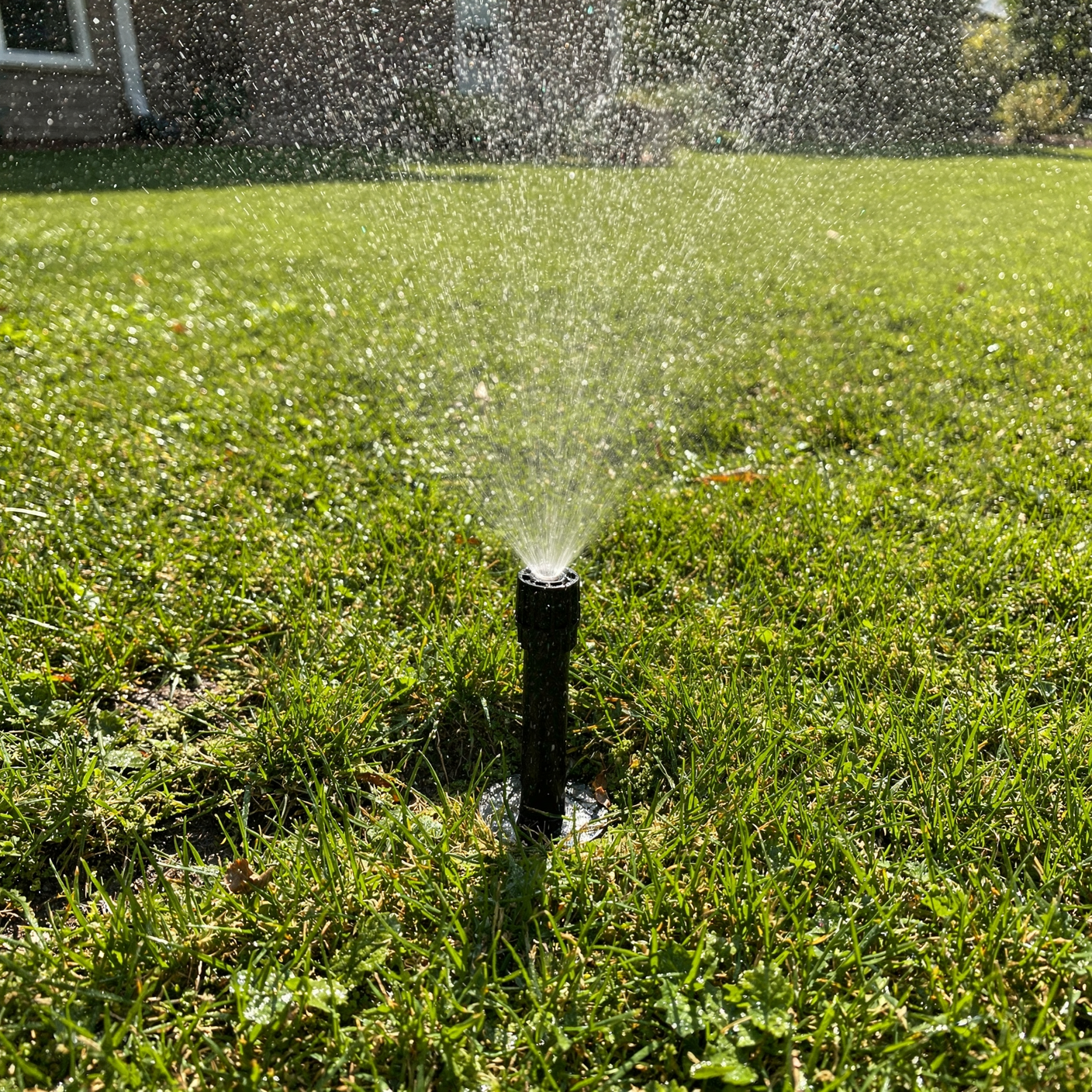
Turn the water on, run every zone, fix broken heads, and set the controller. A start-up that skips the zone check is how a dead strip goes unnoticed until July.
- Backflow testing
Suffolk County Water Authority requires backflow prevention devices on commercial properties, and test results are filed by state-certified testers. Decide who schedules the tester and keeps the records.
- Watering schedule
Suffolk County Water Authority customers water on odd or even days to match the address, and automatic systems shouldn't run from 10 a.m. to 4 p.m. Large properties with many zones need a schedule built around those windows.
- Repairs during the season
Broken heads and small leaks are routine. A main line break is not. Set a dollar limit the contractor can fix without asking, and require a written estimate above it.
- Fall winterization (late October to November)
Blow the water out of the lines before the first hard freeze. Water left in the pipes can freeze and crack lines, heads and the backflow device.
What irrigation service costs
Typical published market ranges, not Green Horizon quotes. Commercial properties are priced after a walkthrough.
| Service | Typical range |
|---|---|
| Spring start-up, typical residential system | $85 to $175 |
| Winterization, typical residential system | $95 to $225 |
| Winterization, 13+ zones (large or commercial) | $250 and up, about $10 to $20 per added zone |
| Backflow test and certification | $150 to $250 per device |
| Sprinkler head replacement | $20 to $60 per head |
| Irrigation checks and repairs (commercial) | $1,000 to $7,000 a year, by system size |
Access is the problem nobody plans for
At many associations, the main shutoff or a controller sits in a garage, utility room or inside a unit. Start-ups and winterizations stall when the crew can't get in. Keep a simple list of where every controller, shutoff and backflow device is and who has the key or code, and give residents notice of service days.
Ask for a short report after start-up and winterization
The date, the zones checked, the repairs made and anything that needs approval, with a few photos. It's the record the board needs when a resident says their lawn didn't get water.
A simple responsibility sheet
Fill in one name per job and attach it to the landscape contract:
| Job | Who handles it | Notes |
|---|---|---|
| Spring start-up and zone check | Target date | |
| Backflow test | Certified tester | |
| Controller programming | Odd/even days, no 10 a.m. to 4 p.m. | |
| Repairs under the limit | Limit: $____ | |
| Fall winterization | Before the first hard freeze |
Sources: Suffolk County Water Authority