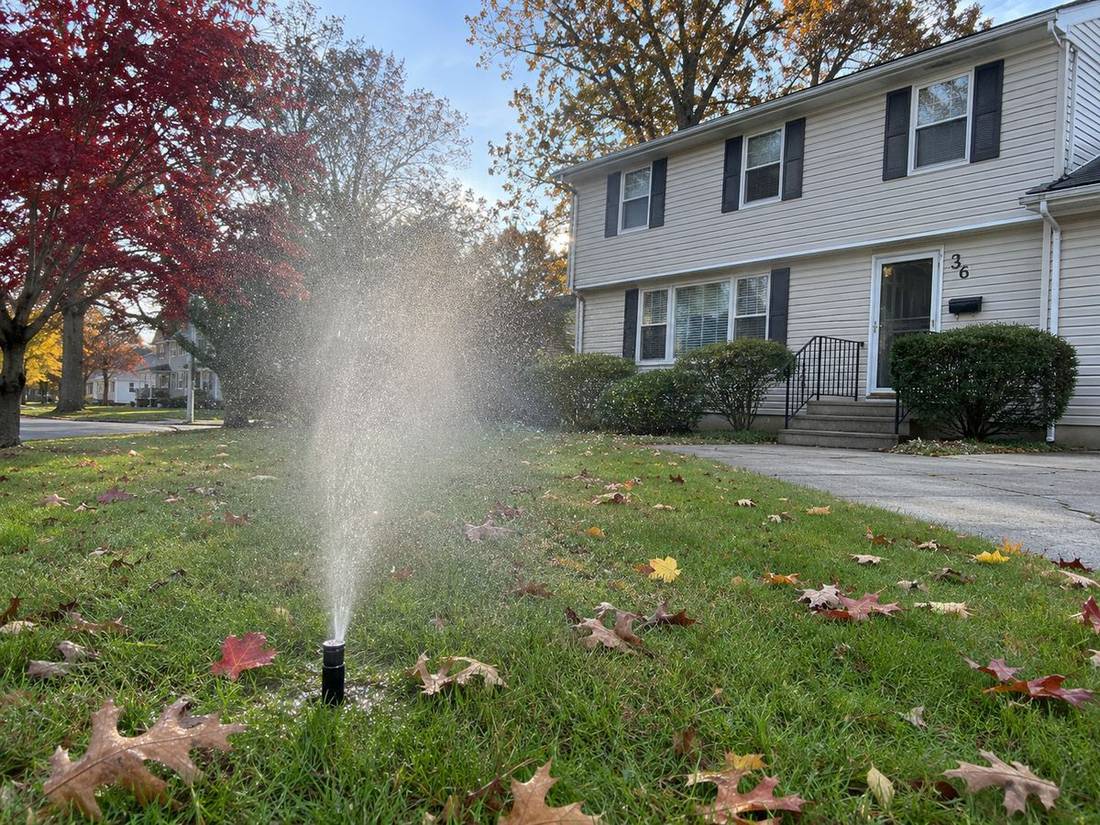
What's included
- Main irrigation water supply shut off
- Every zone blown out with compressed air
- Backflow device drained
- Controller set to off or rain mode
- Quick check for broken heads or leaks
- Notes on any repairs needed for spring
Why winterize on Long Island
Long Island winters swing between mild days and hard freezes, and that freeze-thaw cycle is hard on irrigation lines. Water that sits in pipes, heads and valves expands when it freezes. A single cracked fitting or split valve can mean a leak you don't find until the system is turned back on in spring. The Suffolk County Water Authority lists draining and shutting off sprinkler systems as one of the basic steps to protect your pipes for winter.
When to schedule
Most Long Island systems are winterized from late October through November, before the first hard freeze. Inland and North Shore properties often cool off faster than the South Shore, so earlier is safer. If you want to keep watering a new lawn or new plantings into the fall, we can schedule the blowout for later in the season.
How a blowout works
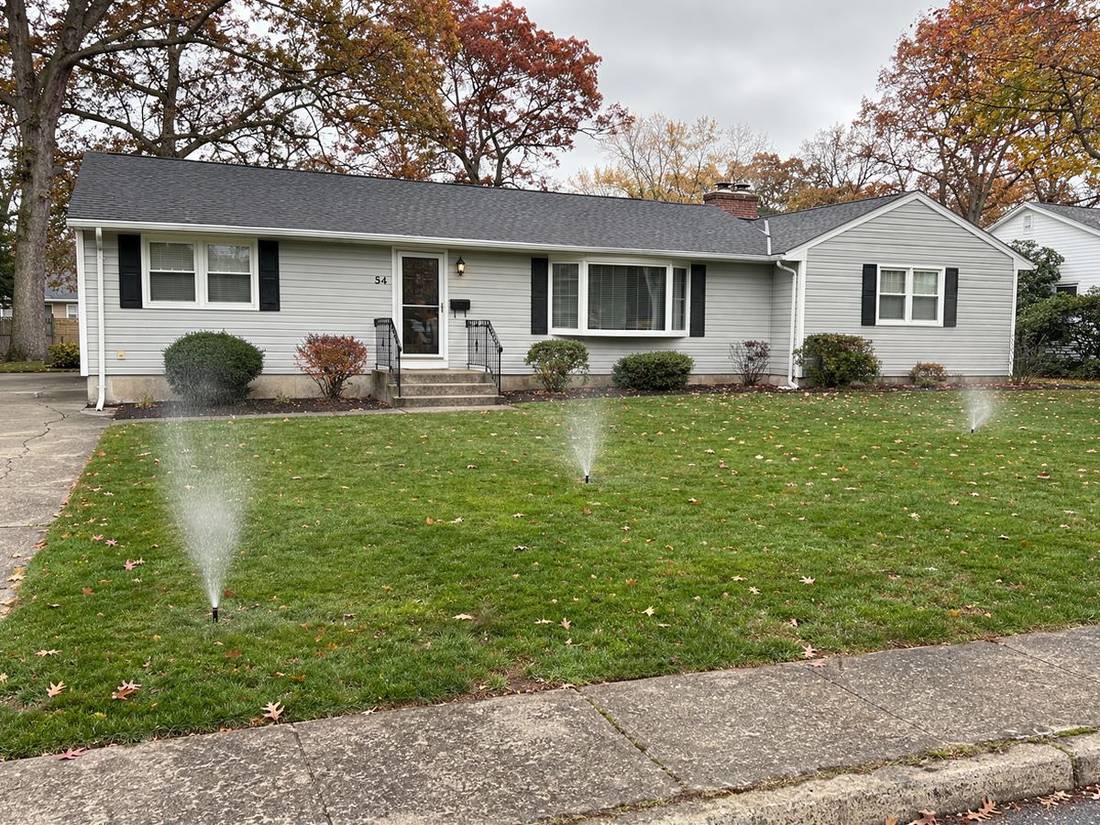
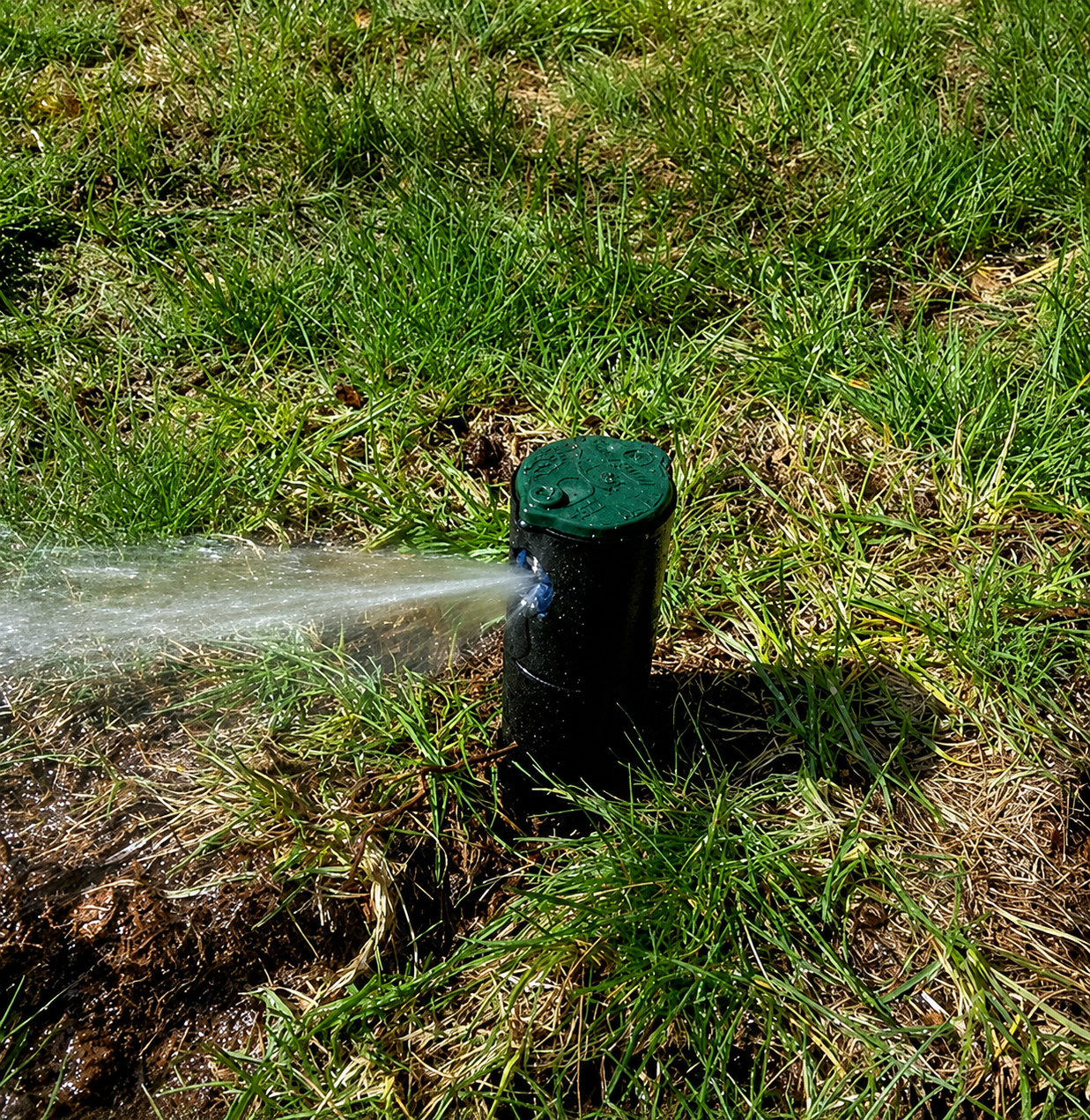
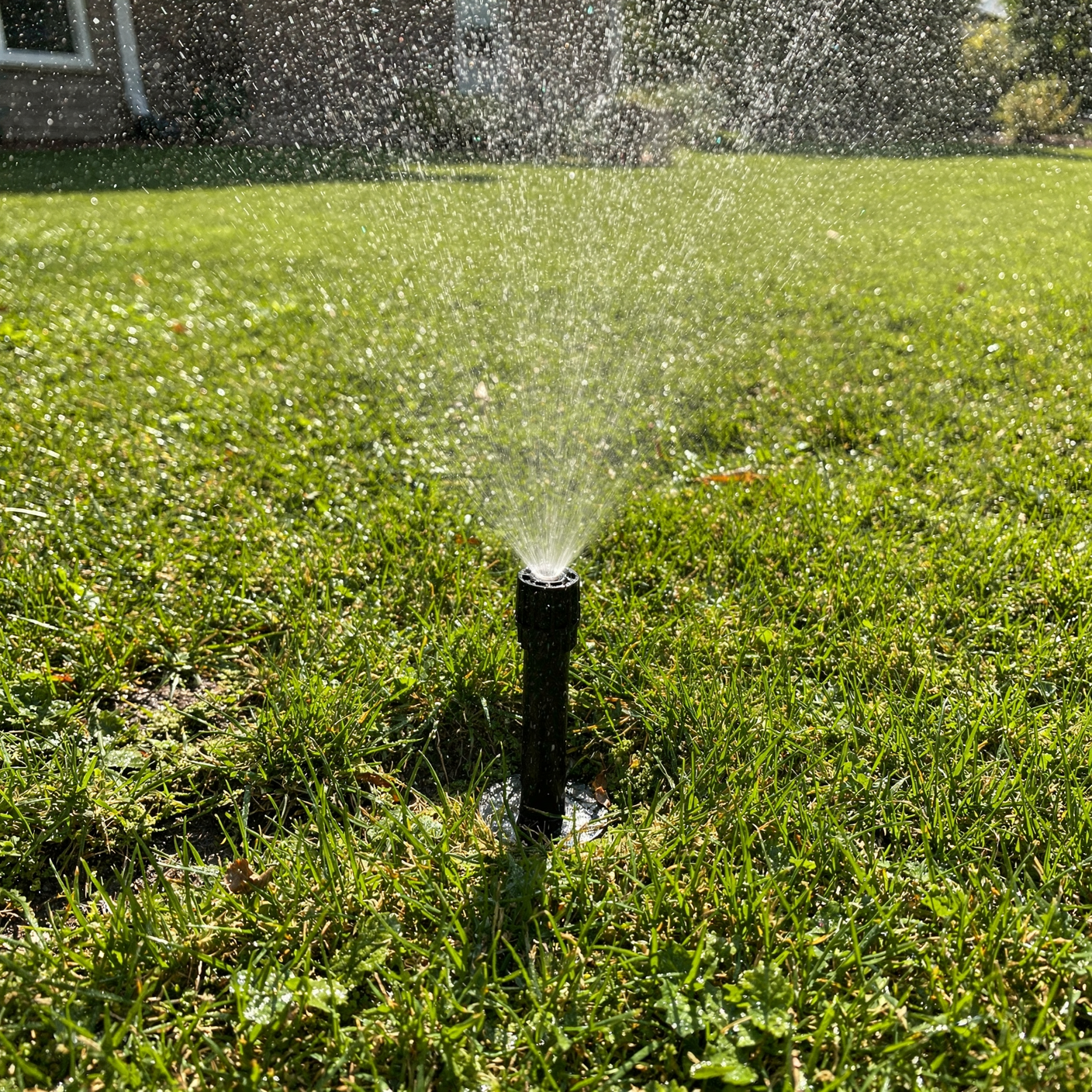
We shut off the water to the irrigation system, connect a compressor to the system after the backflow device, and run each zone one at a time until the heads spray only air. Air pressure is kept in a safe range for residential lines, and zones are run in short cycles rather than one long blast. Once every zone is clear, we drain the backflow and set the controller so the system doesn't try to run over the winter.
Spring start-up
In April or May, once the risk of a hard freeze has passed, we turn the water back on, check every zone, adjust or replace heads and program the controller for the season. If anything turned up during the winterization, we fix it at the start-up. See our sprinkler systems page for repairs, upgrades and new installs.
Where we do sprinkler winterization
We provide sprinkler winterization across Suffolk County and parts of Nassau, including: