Side by side
| Pavers | Natural stone | |
|---|---|---|
| Look | Uniform, many colors | Natural variation |
| Typical LI market cost | About $18 to $35 / sq ft | Usually higher |
| Repairs | Swap single pieces | Harder to match |
| Surface | Non-slip options | Can be slick when wet |
| Best for | Patios, pool decks | Paths, historic homes |
Market ranges, not a quote. Size, access and design drive the final price.
Freeze-thaw is the real test
Long Island winters cycle above and below freezing again and again. Water under a patio freezes, expands and lifts whatever is on top. Interlocking pavers flex slightly and settle back, while rigid stone set on a weak base can crack. In both cases the base matters most: proper excavation, a well-compacted gravel base, edge restraint, and a slight slope away from the house.
Why pavers win most backyards
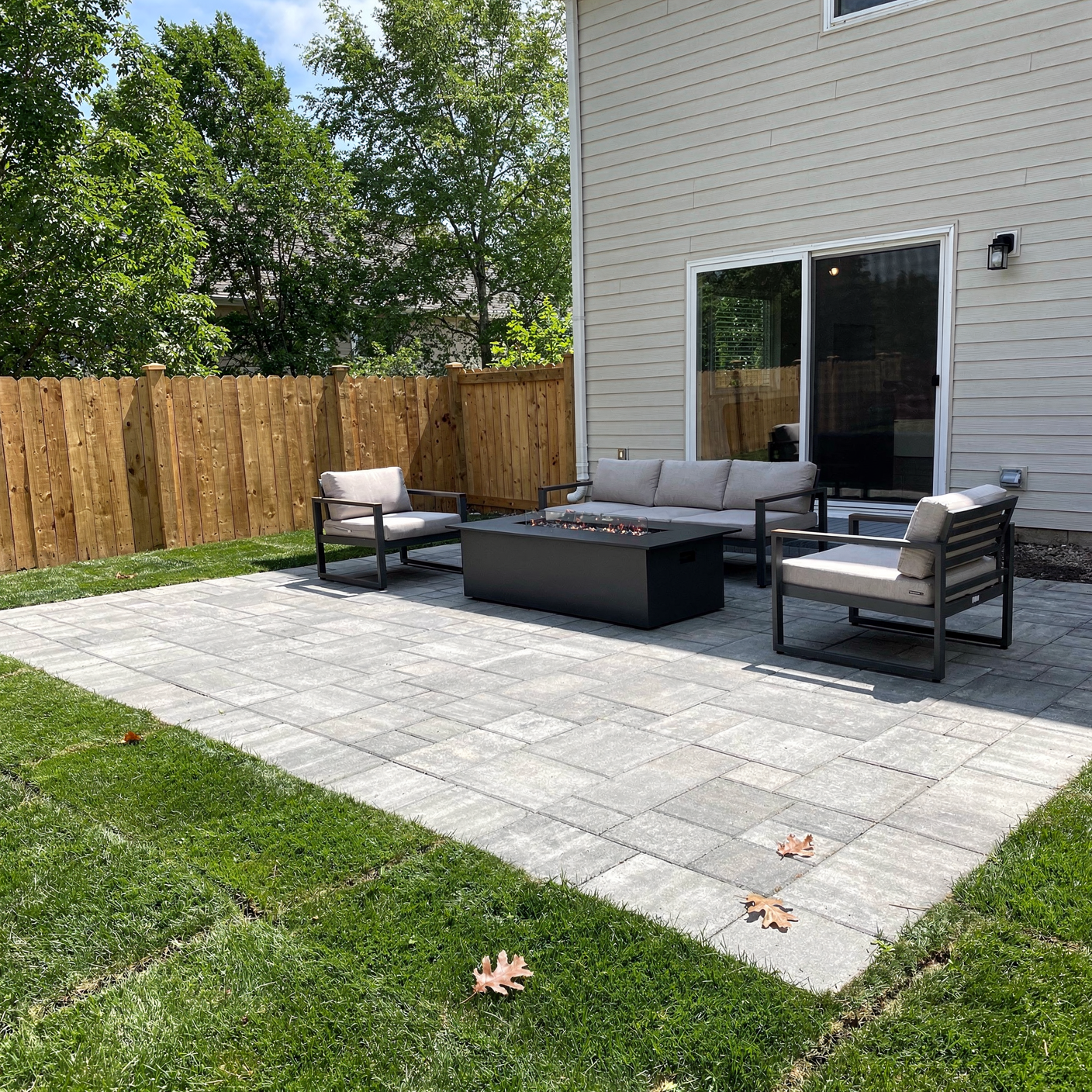
- Hundreds of colors, textures and sizes
- Textured, cooler-colored options for pool decks
- Joints that resist weeds and ants when finished properly
- Easy repairs: lift and reset one section
When natural stone is worth it
For a historic home, a garden path, or a walk that should look like it's always been there, natural stone is hard to beat. Many projects combine both, with a paver field and stone steps or borders.
What drives the price
- Size and shape (curves and borders mean more cutting)
- Access for equipment and materials
- Excavation and base depth
- Extras like steps, seat walls, fire pits and lighting
How a paver patio is built
Industry guidance from paver manufacturers calls for 4 to 6 inches of compacted base for patios and walkways and 8 to 12 inches for driveways, with deeper bases where drainage or soil is poor. Patio pavers are usually at least 2 inches thick, and driveways typically use 2 3/8-inch pavers. The general sequence:
- ExcavateRemove sod and soil to make room for base, bedding and pavers.
- BaseLay and compact crushed stone in layers.
- BeddingA thin, level layer the pavers sit on.
- Lay and cutSet the pattern and cut the edges.
- Edge restraintKeeps pavers from spreading over time.
- JointsSweep in joint sand and compact.
Paver patio maintenance
- Sweep and rinse a few times a season.
- Top up joint sand if it washes out.
- Pull weeds early before roots spread.
- Avoid metal snow shovel blades and heavy rock salt on new pavers.
Popular patio sizes
| Use | Common size |
|---|---|
| Bistro table for two | About 10 x 10 ft |
| Dining table + grill | About 12 x 14 ft or larger |
| Dining + lounge area | About 16 x 20 ft or larger |
| Fire pit with seating | Circle about 14 to 16 ft across |