Sod vs. seed at a glance
| Sod | Seed | |
|---|---|---|
| Looks finished | Same day | 6 to 10 weeks+ |
| Typical LI market cost | About $2 to $4 / sq ft installed | A fraction of sod |
| Best timing | Spring or early fall | Late Aug to late Sept |
| Watering | Daily for about 2 weeks | Keep damp 2 to 3 weeks |
| Slopes | Holds right away | Can wash out |
| Shady yards | Most sod is grown in sun | Pick a shade blend |
Cost range reflects typical Long Island market pricing, not a quote. Every property is priced individually.
When seed is the smarter choice
- Backyards where it doesn't need to look perfect next week.
- Thin lawns that still have decent grass. Aeration and overseeding thickens them for much less than sod.
- Shade. Cornell Cooperative Extension recommends fine fescue blends for shade, and you can choose that seed. Most sod is bluegrass grown in full sun.
- Large areas on a budget.
When sod is worth it
- Front yards and anywhere curb appeal matters now.
- Slopes that erode in heavy rain.
- Spring and summer projects, when new seed has to fight heat and crabgrass.
- Selling a house or hosting on a deadline.
Timing on Long Island
Long Island lawns are cool-season grasses. Suffolk County's lawn guidance says the best period to seed is late August to late September: warm soil speeds germination and cooler nights reduce stress. Spring seeding works but is harder, because young grass has to survive its first summer and spring crabgrass preventers can stop grass seed from sprouting. Sod is more flexible and can go down from spring through early fall with daily watering.
Why soil prep decides the result
Long Island soil is mostly sandy and naturally acidic. Whether you seed or sod, loosening compacted soil, correcting pH (Suffolk County's guide points to a pH of 6.0 to 7.0) and grading so water drains away from the house are what make a new lawn last. Sod laid on hard, unprepared ground often never roots and browns out by August.
Watering
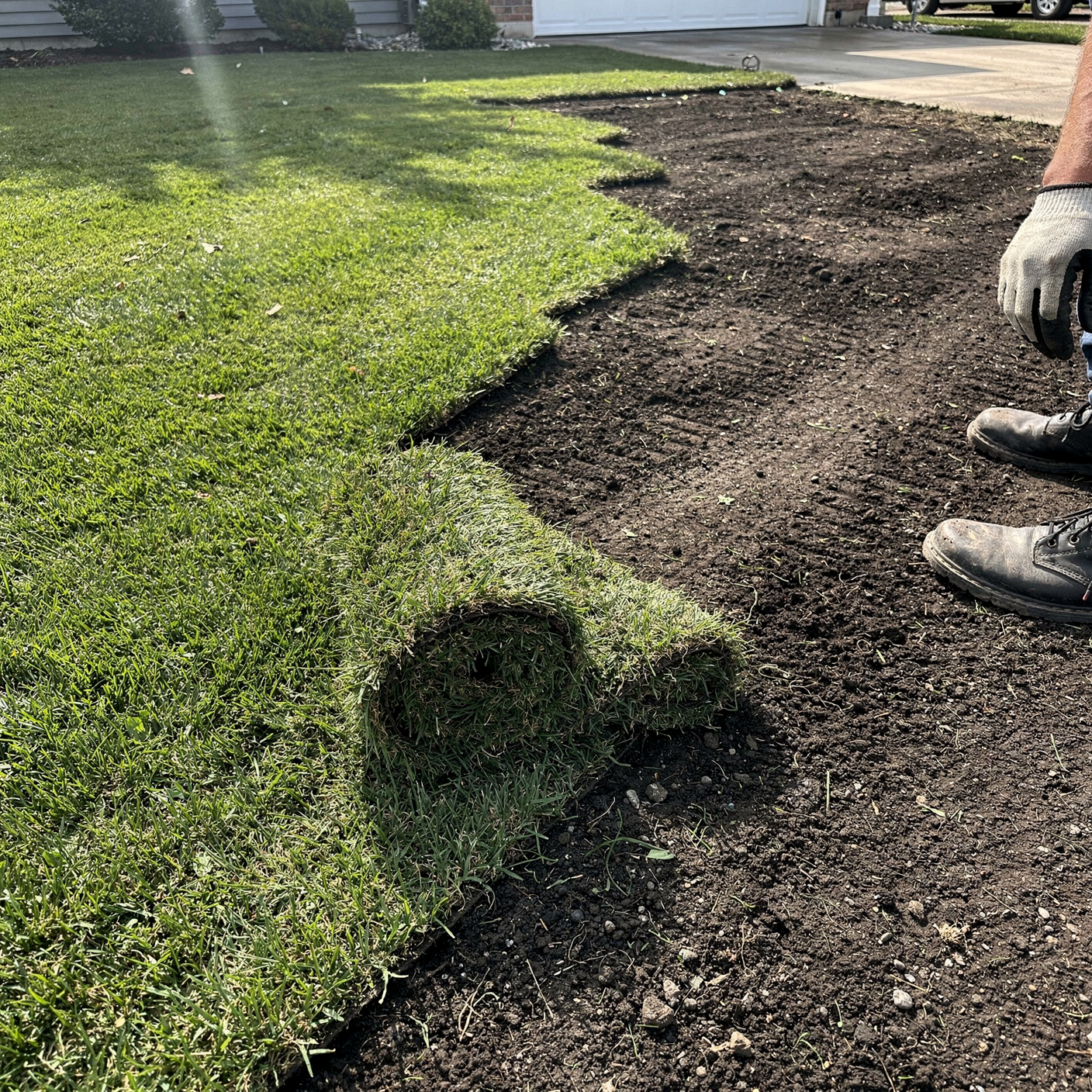
Seed: keep the top inch of soil damp with short waterings once or twice a day until it sprouts. Sod: water daily for about two weeks so the sod and the soil underneath stay moist, then water deeper and less often. If you're on Suffolk County Water Authority water, irrigation runs on an odd/even address schedule and not between 10 a.m. and 4 p.m.
Signs your new sod isn't rooting
- Corners lift easily after two to three weeks
- Seams are shrinking or turning brown
- The sod feels spongy, or water pools on top
Most of the time the cause is too little water in the first two weeks, or sod laid on hard, compacted soil. Keeping the soil under the sod moist is what pulls the roots down.
Feeding a new lawn
New York's Nutrient Runoff Law generally requires phosphorus-free lawn fertilizer, but it makes an exception for establishing a new lawn during its first growing season. That's why starter fertilizers are allowed on new seed and sod. On Long Island, Suffolk County still prohibits all lawn fertilizer from November 1 to April 1, so time it inside that window.
Sod or seed in shade, slopes and high-traffic areas
| Situation | Better choice |
|---|---|
| Deep shade under trees | Seed with fine fescue |
| Steep slope that washes out | Sod |
| Dogs and kids | Tall fescue seed or sod |
| Front yard, selling soon | Sod |
| Large backyard on a budget | Seed in late summer |